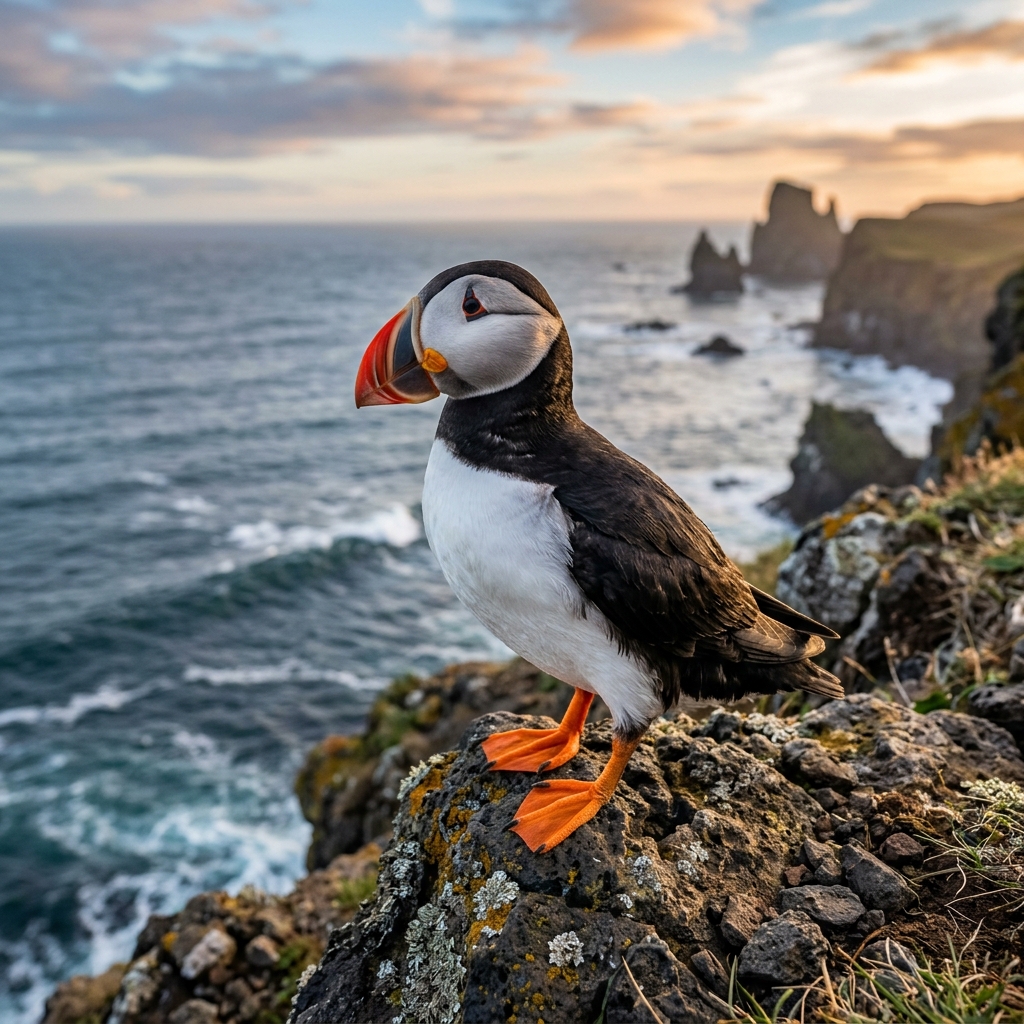
Iceland hosts 8–10 million breeding pairs — the Látrabjarg cliffs in the Westfjords are the world's largest Puffin colony, with birds at arm's reach from the cliff top.
Iceland is the Gyrfalcon's stronghold in Europe — white and grey morphs both occur, nesting on volcanic cliff faces and hunting Ptarmigan across the lava fields.
Iceland holds the largest European breeding population — pairs breed on fast-flowing glacial rivers, with the Laxa River near Mývatn being the most accessible site.
Iceland hosts massive colonies — the terns arrive in May after their 71,000 km round trip from Antarctica and aggressively dive-bomb anyone approaching their nests.
Iceland's breeding population is recovering — Breiðafjörður bay with its thousands of islands provides ideal nesting and foraging habitat for this massive eagle.
Iceland's most evocative breeding bird — huge, raucous calls echo over tundra wetlands where pairs nest near glacial meltwater lakes.
Nests in vast cliff-face colonies alongside Common Guillemots and Razorbills at Iceland's westernmost sea cliffs — millions of birds in continuous activity.
Iceland is a key breeding area for the Purple Sandpiper — pairs nest on upland tundra and coastal heaths, wintering on rocky shorelines throughout the Atlantic.
Free: Backyard Birds ID Chart
Printable PDF — verified eBird data
Ready to Bird Iceland?
Use our smart trip planner to get a custom itinerary — best hotspots, species targets, and seasonal timing tailored to your visit.