Florida's only truly endemic bird — found exclusively in oak scrub habitats and cooperatively breeds in family groups, approaching observers to within arm's reach.
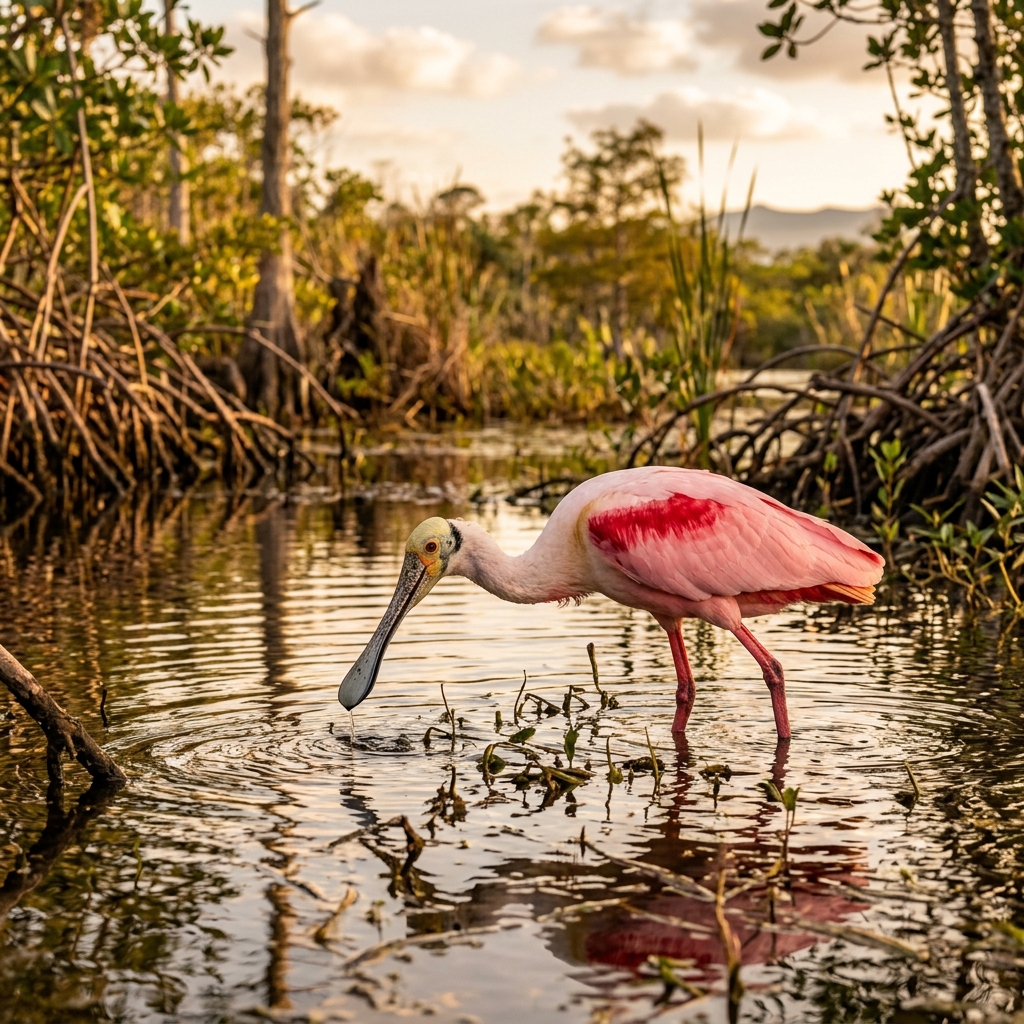
The Ding Darling Refuge on Sanibel Island provides some of the most accessible spoonbill viewing in the USA — hundreds feed along the Wildlife Drive daily.
Population has recovered to record numbers following wetland restoration — Lake Okeechobee's water management impoundments are consistently productive.
Cape Coral has the largest urban Burrowing Owl population in the world — pairs nest on suburban lawns and are remarkably tolerant of close approach.
Dry Tortugas hosts the USA's largest nesting colony — males inflate brilliant red throat pouches in extraordinary aerial courtship displays above the fort.
Florida's resident dabbling duck — a year-round breeder in freshwater marshes that hybridizes with released Mallards, making pure individuals increasingly scarce.
Called the "nonpareil" — the male is arguably North America's most colorful bird, with red, blue, and green plumage; winters along Florida's coasts in good numbers.
Listed as threatened but recovering thanks to wetland restoration — Corkscrew Swamp Sanctuary's old-growth cypress swamp hosts the largest US nesting colony.
Free: Backyard Birds ID Chart
Printable PDF — verified eBird data
Ready to Bird Florida (USA)?
Use our smart trip planner to get a custom itinerary — best hotspots, species targets, and seasonal timing tailored to your visit.