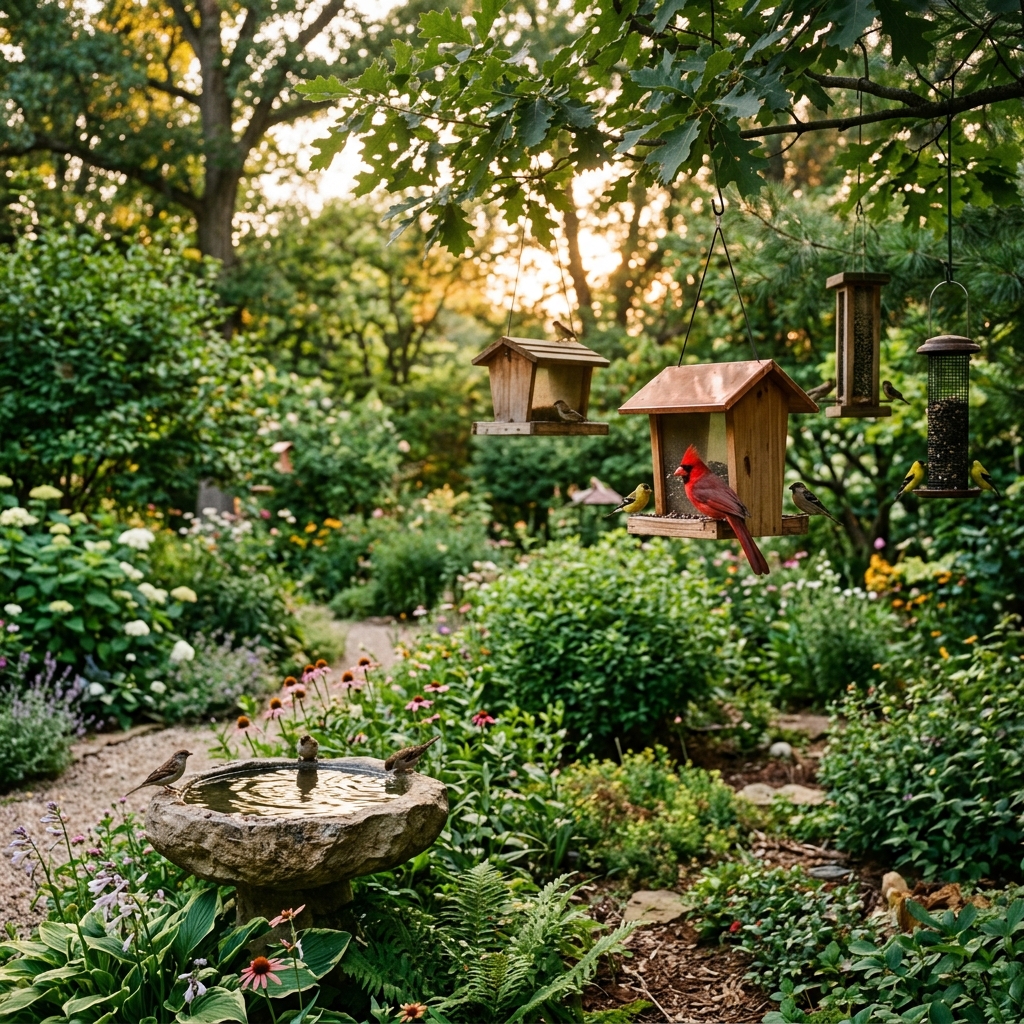
When natural insects disappear and snow covers weed seed, backyard feeders become a reliable calorie station for resident birds — chickadees, nuthatches, cardinals, woodpeckers, juncos, and more. Millions of North Americans already participate; Cornell’s Project FeederWatch turns that habit into citizen science by tracking which species show up at backyard feeders each winter.
This guide summarizes what FeederWatch, Audubon, and wildlife agencies consistently recommend: high-energy food, clean feeders, open water, and realistic expectations. It is not a substitute for local regulations (some areas restrict feeding during bear season or avian disease outbreaks).
Researched and written by the AvianScope editorial team.
If you are new to birding entirely, start with our Birdwatching for Beginners guide, then come back here for the winter feeding layer.
Do birds need winter feeders?
Short answer: healthy wild bird populations do not depend on feeders, but supplemental food can help individual birds through cold snaps and gives you a front-row seat for identification practice.
Cornell’s FeederWatch and All About Birds materials emphasize that feeders are a supplement, not a replacement for habitat. Native plants, brush piles, and water matter more over a full year than any bag of seed. Pair this article with Creating a Bird-Friendly Backyard Habitat if you want the bigger picture.
What feeders do reliably provide:
- Higher winter detection of common species at your window
- A teaching tool for kids and new birders
- A reason to notice when something unusual shows up (a rare winter finch, an early migrant)
When to start winter feeding
| Climate | Practical start window |
|---|---|
| Snow-belt / northern US & Canada | As nighttime lows settle near freezing and natural seed is scarce — often late October through November |
| Mild Mid-Atlantic / Pacific Northwest | When deciduous trees are bare and insect activity drops — often November |
| Deep South / Gulf Coast | Feed year-round if you like; “winter” peaks still bring juncos and sparrows south |
You do not need to wait for the first snow. Starting a few weeks earlier lets birds find the station before the hardest weather. Once you start in earnest for winter, try to keep the food supply consistent — birds will incorporate your yard into their daily circuit.
When to stop or scale back: In spring, as natural food returns, you can reduce volume. Hummingbird nectar schedules are regional; follow local Audubon timing. If your state or province issues a temporary feeding ban (for example during avian influenza outbreaks or for bears), follow that guidance immediately.
What to feed in winter (the short list)
1. Black-oil sunflower — the default
If you buy only one thing, buy black-oil sunflower seed. Thin shells, high fat, accepted by a wide range of feeder birds. FeederWatch participants report it among the most widely used and effective foods.
Best in: tube feeders, hopper feeders, platform trays.
2. Suet — for insect-eaters
Woodpeckers, nuthatches, chickadees, and wrens key in on fat when insects are gone. Use a simple suet cage. In deep cold, standard suet is fine; save “no-melt” formulas for warm spells.
3. Nyjer (thistle) — for finches
Goldfinches and siskins prefer Nyjer in a fine-port thistle feeder. Keep it dry; Nyjer molds quickly when wet.
4. White millet & cracked corn — for ground feeders
Juncos, sparrows, and doves often prefer platform or ground feeding. Offer small amounts of white millet or cracked corn on a tray you can sweep clean — do not dump piles that sit under snow for weeks.
5. Safflower — when squirrels and bully birds are a problem
Many cardinals accept safflower; some squirrels and starlings dislike it. Useful as a partial swap, not a miracle. Details in our companion draft on seed for cardinals and blue jays.
Foods to skip (or use sparingly)
- Cheap mixes heavy on red milo / sorghum — often wasted
- Bread and bakery scraps — poor nutrition, mold risk
- Bacon grease or heavily seasoned leftovers
- Seed that smells musty or looks clumped — throw it out
For a year-round feeder setup overview, see Backyard Bird Feeding: How to Attract 20+ Species.
Winter feeder setup that actually works
- Place feeders 10+ feet from dense cover where cats or hawks can ambush — but within a quick flight to shrubs so birds can escape. Audubon’s backyard guidance stresses this balance.
- Use a baffled pole or a smooth hanger if squirrels empty the feeder daily (full squirrel-proof round is next on our calendar).
- Offer water. A heated bath or de-icer often brings species that ignore seed. Clean it as carefully as you clean feeders.
- Stock calories before storms. Refill ahead of multi-day freezes so you are not standing on ice with an empty bag.
- Think layers: one sunflower station + one suet + optional nyjer covers most winter visitors without turning the yard into a cafeteria.
Mistakes that waste seed (and stress birds)
Mistake 1: Buying the cheapest “wild bird mix”
You pay for seed birds fling. Read the ingredient list; look for black-oil sunflower as a primary ingredient.
Mistake 2: Never cleaning feeders
Damp seed and droppings spread disease. FeederWatch and Audubon both recommend regular cleaning — a dilute bleach solution (then thorough rinse and dry) or hot soapy water, depending on the guidance you follow. Clean more often in wet thaws.
Mistake 3: Letting hull piles rot under the feeder
Rake or sweep; moldy debris is a health risk and attracts rodents.
Mistake 4: Starting, then disappearing for two weeks
Consistency matters more than perfection. If you travel, use a large-capacity hopper or ask a neighbor.
Mistake 5: Ignoring local alerts
When wildlife agencies report trichomoniasis, salmonella, or avian flu clusters, pause feeding and remove baths until cleared.
Mistake 6: Expecting tropical rarities
Winter feeders mostly host hardy residents and short-distance migrants. That is still excellent birding — learn your juncos and sparrows well.
A simple winter feeding calendar
| Month | Focus |
|---|---|
| October–November | Start sunflower + suet; inspect feeders for cracks; set up baffles |
| December–January | Peak feeding; protect water from freezing; watch for irruptive finches |
| February | Continue high-energy foods; clean after thaw cycles |
| March | Begin tapering if natural food returns; watch for early migrants |
Identification practice at the winter tray
Winter is the best season to learn feeder sparrows and finches without leaf cover. Keep a pocket chart by the window — our Sparrow ID Pocket Reference was built for exactly this problem — and log what you see in Merlin or eBird.
Related reading once you are hooked:
Free next step
Download the free Backyard Birds chart from /free and tape it beside the feeder window. Then, when you are ready, add one high-quality seed type and one clean feeder — not five gadgets.
Sources
- Cornell Lab of Ornithology — Project FeederWatch: https://feederwatch.org
- Cornell Lab — All About Birds (feeding and species accounts): https://www.allaboutbirds.org
- National Audubon Society — backyard birds / feeder guidance: https://www.audubon.org
- Follow your state or provincial wildlife agency for temporary feeding restrictions
Affiliate disclosure: Seed and feeder links may use our Amazon Associates tag. We may earn a commission at no extra cost to you.
Find your perfect birding location next
Use our smart planner to discover the best spots matched to your experience level and the birds you want to see.