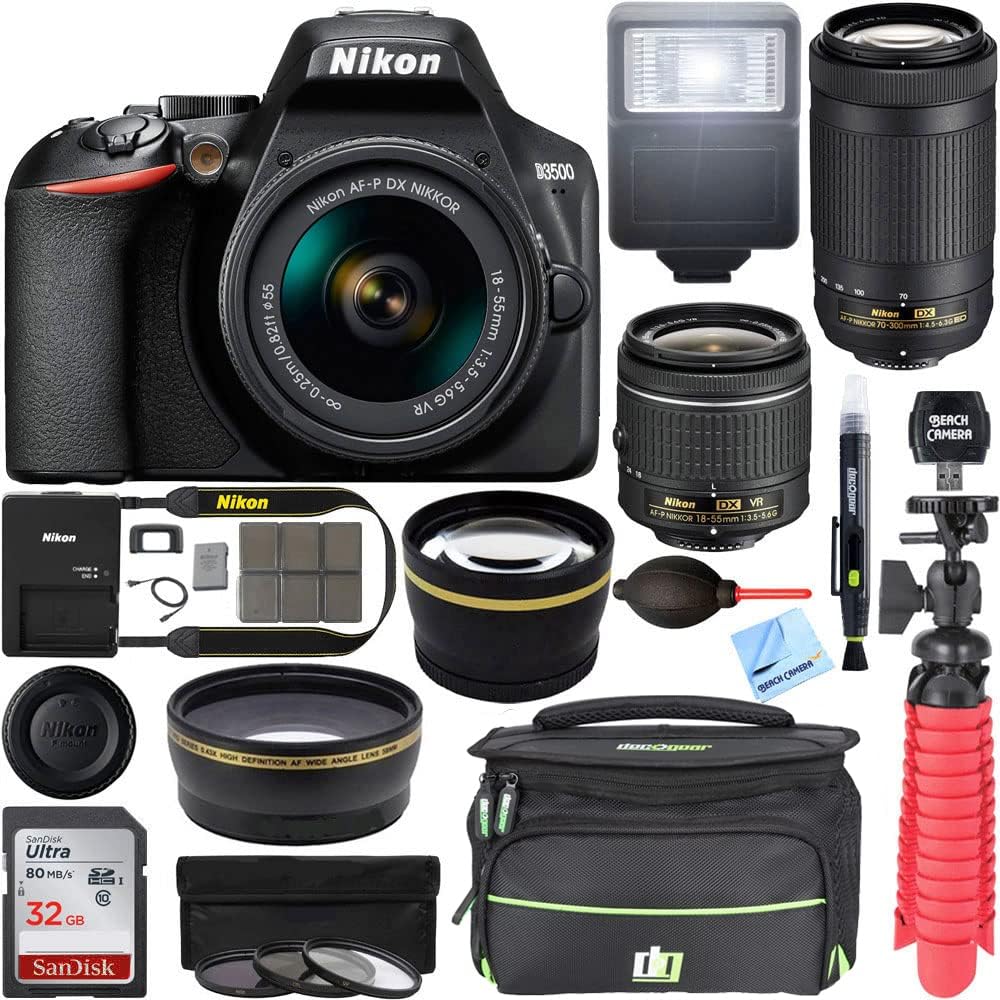
Head-to-Head Comparison
| Feature | ⭐ Mirrorless | DSLR |
|---|
| AF Subject Tracking | Bird/animal AI tracking (Sony, Canon, Nikon) | Subject tracking — less capable |
| Burst Rate (mechanical) | 20 – 120 fps (electronic) | 8 – 14 fps |
| Viewfinder | Electronic (EVF) with live exposure | Optical (OVF) — no lag, natural feel |
| Body Weight | Typically 400 – 600g | Typically 600 – 1000g |
| Lens Ecosystem | Growing fast — native mount lenses | Mature — decades of lens options |
| Battery Life (shots/charge) | 300 – 600 shots | 700 – 1500 shots |
| In-Body Stabilization | 5-axis IBIS standard | Rare / limited |
| Video Capability | 4K+ with oversampling | Limited 4K or 1080p only |
| Entry Body Price | $1,500 – $2,500 | $600 – $1,200 |
Pros & Cons
Mirrorless
✓ Pros
- +AI bird/animal eye-detect AF — dramatically higher keeper rate
- +Silent electronic shutter — important near nesting birds
- +Lighter body with IBIS — longer handheld sessions
- +Faster live-view refresh than DSLR mirror systems
- +Future-proof platform — all major brands investing in mirrorless
✗ Cons
- −Higher entry cost for body and native lenses
- −Shorter battery life — carry 2–3 batteries in the field
- −EVF can lag briefly in fast-changing conditions (though nearly eliminated in 2024+ models)
DSLR
✓ Pros
- +Lower entry cost — excellent DSLR bodies available used at $300–$600
- +Longer battery life — important on multi-day trips without charging
- +Optical viewfinder — zero lag, natural for moving subjects
- +Massive mature lens ecosystem — decades of glass available
✗ Cons
- −Canon and Nikon have both ended DSLR development — a dead-end platform
- −AF tracking inferior to modern mirrorless by a significant margin
- −Heavier and bulkier than equivalent mirrorless systems
- −Mirror blackout during burst shooting causes missed frames
Which Should You Choose?
The right choice depends heavily on where and how you bird. Here's our scenario-by-scenario guidance:
Buying your first bird photography kit in 2025
→ Mirrorless
DSLRs are no longer being developed. Buy into a live platform.
Already own Canon EF or Nikon F lenses
→ Either — use adapter
You can adapt DSLR lenses to mirrorless with full AF performance. Consider Canon R or Nikon Z body with adapter.
Flight photography in bright light
→ Mirrorless
AI subject tracking and high burst rates produce dramatically more keepers on birds in flight.
Photography near nesting sites
→ Mirrorless
Silent electronic shutter avoids disturbing nesting birds.
Our Top Picks
As an Amazon Associate and B&H Photo affiliate, AvianScope earns from qualifying purchases. This helps keep AvianScope free.
Best Value MirrorlessCanon EOS R7 (Body)
~$1,499
Top Pro MirrorlessSony A9 III (Body)
~$5,999
Frequently Asked Questions
Is a mirrorless camera better than a DSLR for birds in flight?+
Yes — significantly. Modern mirrorless cameras with AI bird-detect autofocus (Sony a9 III, Canon R7, Nikon Z9) achieve keeper rates 2–3× higher than the best DSLR AF in comparable testing.
Can I use my DSLR lenses on a mirrorless camera?+
Yes — Canon EF lenses work excellently on Canon R bodies via the EF-EOS R adapter. Nikon F lenses work on Z bodies via the FTZ adapter. AF performance is generally very good, though some older lenses are slower.
What is the best entry-level mirrorless for bird photography?+
The Canon EOS R7 is the highest-value bird photography mirrorless currently available. It features Canon's AI animal detection, 30fps burst, and APS-C crop that extends lens reach by 1.6×.
★ COMPLETE YOUR KIT
Got the Gear? Now Get the Guides.
6 premium field guides & logbooks — regional hotspot maps, species checklists, trip planners, and more. Everything you need in the field.
Instant PDF download · One-time purchase · Retail value $112.94
Ready to Find Your Perfect Birding Spot?
Use our trip planner to match the right habitat to your new gear — hotspots, seasonal timing, and species targets all in one place.