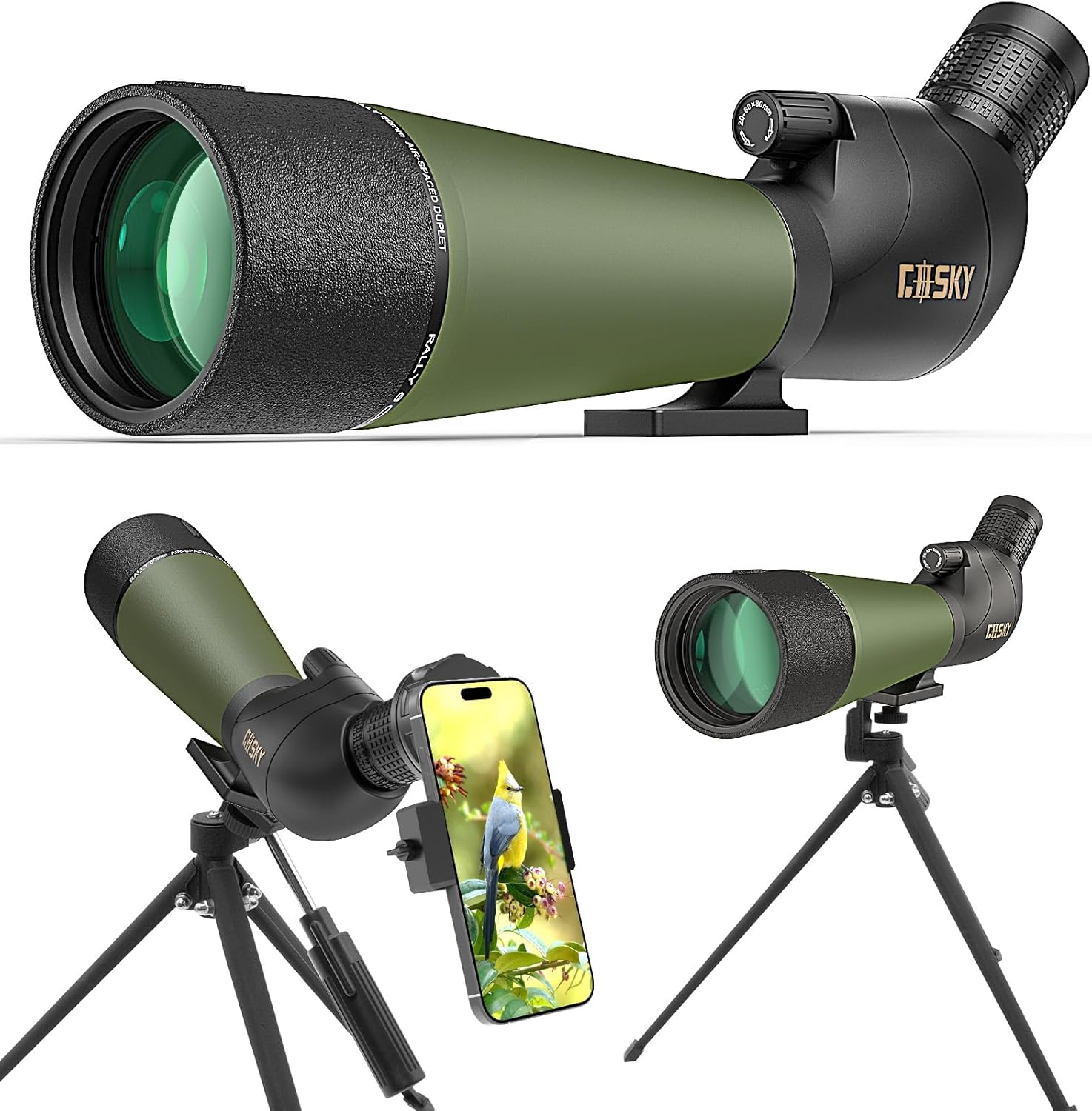
Binoculars vs Spotting Scope: Which Do You Need?
HomeGearBinoculars vs Spotting Scope
🔭 Binoculars · Gear Guide

Binoculars vs Spotting Scope: Which Do You Need?

The most common question birders ask. We answer it definitively.

Best for most birders
Binoculars

Quick verdict: For most birders, a quality 8x42 or 10x42 binocular is the right primary tool. A spotting scope earns its place as a specialist complement — not a replacement — for open-country birding, hawk watches, and shorebird study.

Head-to-Head Comparison

FeatureBinocularsSpotting Scope
Magnification6x – 12x (fixed or zoom)20x – 60x (zoom eyepiece)
Field of ViewWide — easy to locate birdsNarrow — requires target already found
PortabilityCompact, handheld, always readyRequires tripod, heavier setup
Setup TimeInstant1 – 3 minutes on a tripod
Low-Light PerformanceExcellent (large exit pupil)Good with large objective lens
DigiscopingLimited — phone adapters existExcellent — primary use case
Detail on Distant BirdsGood to 200 – 300mExceptional beyond 300m
Price (entry level)$100 – $300$300 – $600
Price (premium)$1,500 – $3,000$1,500 – $4,000+

Pros & Cons

Binoculars
✓ Pros
  • +Instant target acquisition — no tripod needed
  • +Wide field of view makes locating birds easy
  • +Comfortable for hours of continuous use
  • +Usable in forest, field, sea — any habitat
  • +Better low-light performance at equivalent price
✗ Cons
  • Maximum magnification limited to ~12x handheld
  • Not ideal for serious digiscoping
  • Identification of very distant shorebirds or raptors can be difficult
Spotting Scope
✓ Pros
  • +20x – 60x magnification for extreme detail
  • +Perfect for hawk watches, pelagic trips, and estuary birding
  • +Digiscoping through a phone adapter produces remarkable results
  • +Can resolve field marks invisible to binoculars
✗ Cons
  • Requires a tripod — adds bulk and setup time
  • Narrow field of view makes finding birds harder
  • Poor choice in dense forest habitat
  • Heavy in the field; not practical for casual day hikes

Which Should You Choose?

The right choice depends heavily on where and how you bird. Here's our scenario-by-scenario guidance:

Forest birding
Binoculars
Dense canopy means birds are close and moving; wide FOV and fast acquisition are critical.
Shorebird flats / mudflats
Both
Binoculars to locate; spotting scope to identify distant waders with precision.
Hawk watching
Spotting Scope
High magnification lets you pick out species and plumage details on slow-moving raptors at range.
Pelagic boat trips
Binoculars
Boat motion makes a tripod-mounted scope impractical; 10x42 binoculars are the standard.
Backyard & garden
Binoculars
Distances are short; instant-on use is more important than magnification.
Big Year / listing trip
Binoculars primary, scope secondary
Speed matters; pack binoculars, car-mount the scope for stationary vigils.

Our Top Picks

As an Amazon Associate we earn from qualifying purchases. This helps keep AvianScope free.

Best Value Binocs
Vortex Diamondback HD 10x42
~$200
View on Amazon →
Top Scope Pick
Vortex Razor HD 27-60x85 Spotting Scope
~$1,100
View on Amazon →
Budget Scope
Celestron Ultima 80 Angled Scope
~$180
View on Amazon →

Frequently Asked Questions

Can I use a spotting scope without a tripod?+
Technically yes — some birders hand-hold a scope for brief moments — but image shake at 30x+ makes it essentially useless without support. A lightweight carbon-fibre tripod is mandatory.
What magnification binoculars are best for birding?+
8x42 and 10x42 are the birding standards. 8x gives a wider, steadier view ideal for forest birding; 10x provides more reach for open-country and coastal work.
Do I need both?+
Many serious birders eventually own both. Start with a quality pair of binoculars — add a scope once you are regularly birding open habitats where identification at range becomes a limiting factor.
What is digiscoping?+
Digiscoping is photographing through a spotting scope using a smartphone adapter or dedicated camera. Scopes are vastly better than binoculars for this purpose due to higher magnification and stable tripod mounting.

Ready to Find Your Perfect Birding Spot?

Use our trip planner to match the right habitat to your new gear — hotspots, seasonal timing, and species targets all in one place.

Plan a Birding TripMore Gear Guides