Head-to-Head Comparison
| Feature | ⭐ 8x42 | 10x42 |
|---|---|---|
| Magnification | 8× | 10× |
| Objective Lens Diameter | 42mm | 42mm |
| Exit Pupil | 5.25mm | 4.2mm |
| Typical Field of View | ~420 ft / 1000 yds | ~340 ft / 1000 yds |
| Low‑Light Performance | Excellent | Good |
| Image Shake (hand-held) | Minimal | Noticeable at 10× |
| Close Focus Distance | ~4 – 5 ft | ~6 – 8 ft |
| Weight (typical) | ~600 – 700g | ~620 – 720g |
| Best habitat | Forest, woodland, gardens | Coast, grassland, open country |
Pros & Cons
Which Should You Choose?
The right choice depends heavily on where and how you bird. Here's our scenario-by-scenario guidance:
Forest & woodland warbler hunting
→ 8x42
Wide FOV is essential when birds are close and darting through foliage.
Mudflat & estuary birding
→ 10x42
Waders stand still; extra magnification resolves leg and bill colour at range.
Hawk watching / raptor migration
→ 10x42
Raptors often soar at range; 10× helps pick out wing patterns and plumage.
Dawn chorus & early-morning birding
→ 8x42
Larger exit pupil gathers more light — critical before sunrise.
General all-round use (first binocular)
→ 8x42
More forgiving, easier to use — the learning curve is gentler with a wider FOV.
Pelagic seabird trips
→ 10x42
Seabirds in flight at distance benefit from extra magnification; boat motion is less of an issue than on small craft.
Our Top Picks
As an Amazon Associate and B&H Photo affiliate, AvianScope earns from qualifying purchases. This helps keep AvianScope free.
Best Value 8x42
View on B&H Photo →Vortex Diamondback HD 8x42
~$200
Best Value 10x42
Vortex Diamondback HD 10x42
~$200
Mid-Range Pick
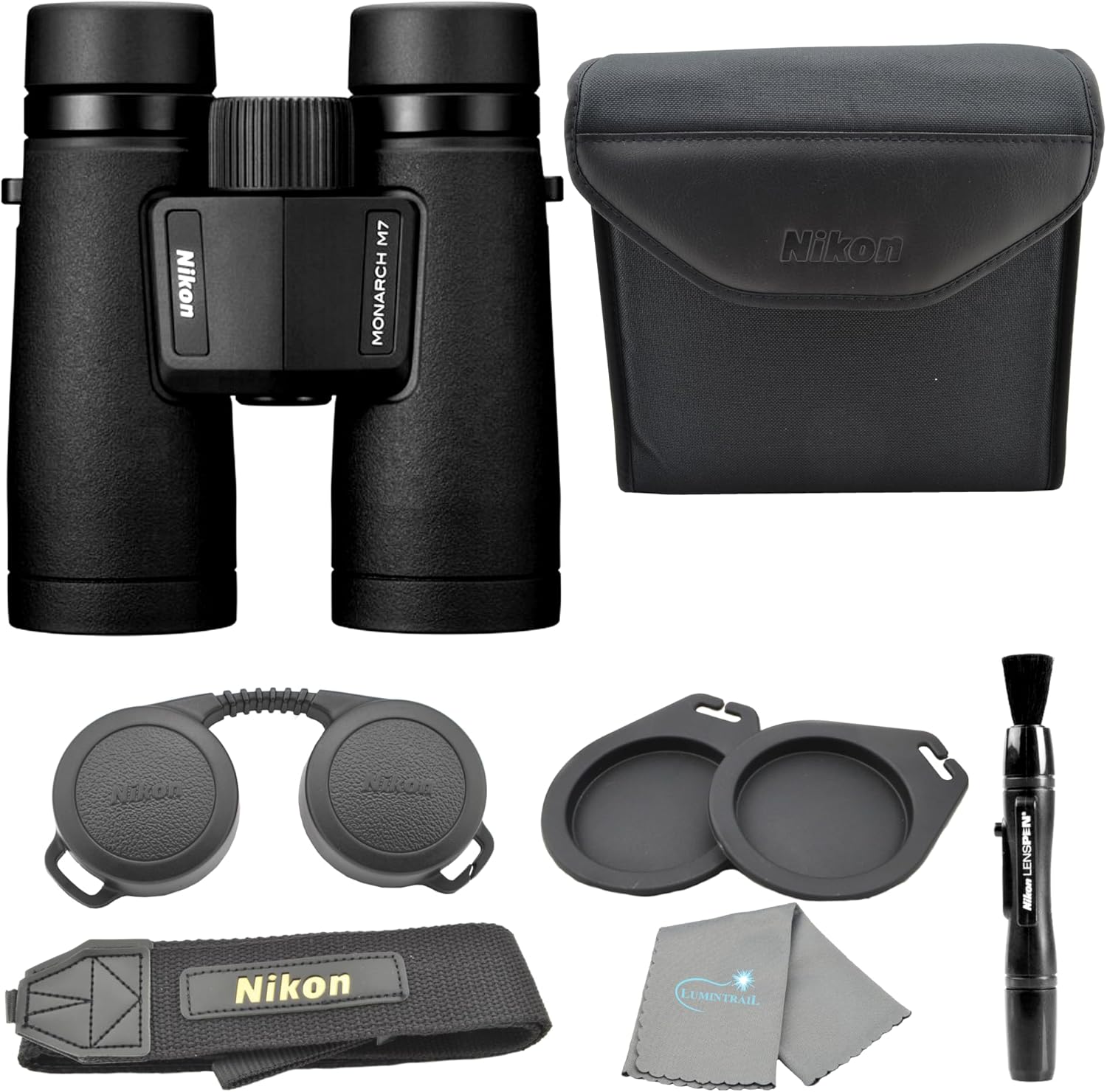
Nikon Monarch M7 8x42
~$380
Frequently Asked Questions
Ready to Find Your Perfect Birding Spot?
Use our trip planner to match the right habitat to your new gear — hotspots, seasonal timing, and species targets all in one place.