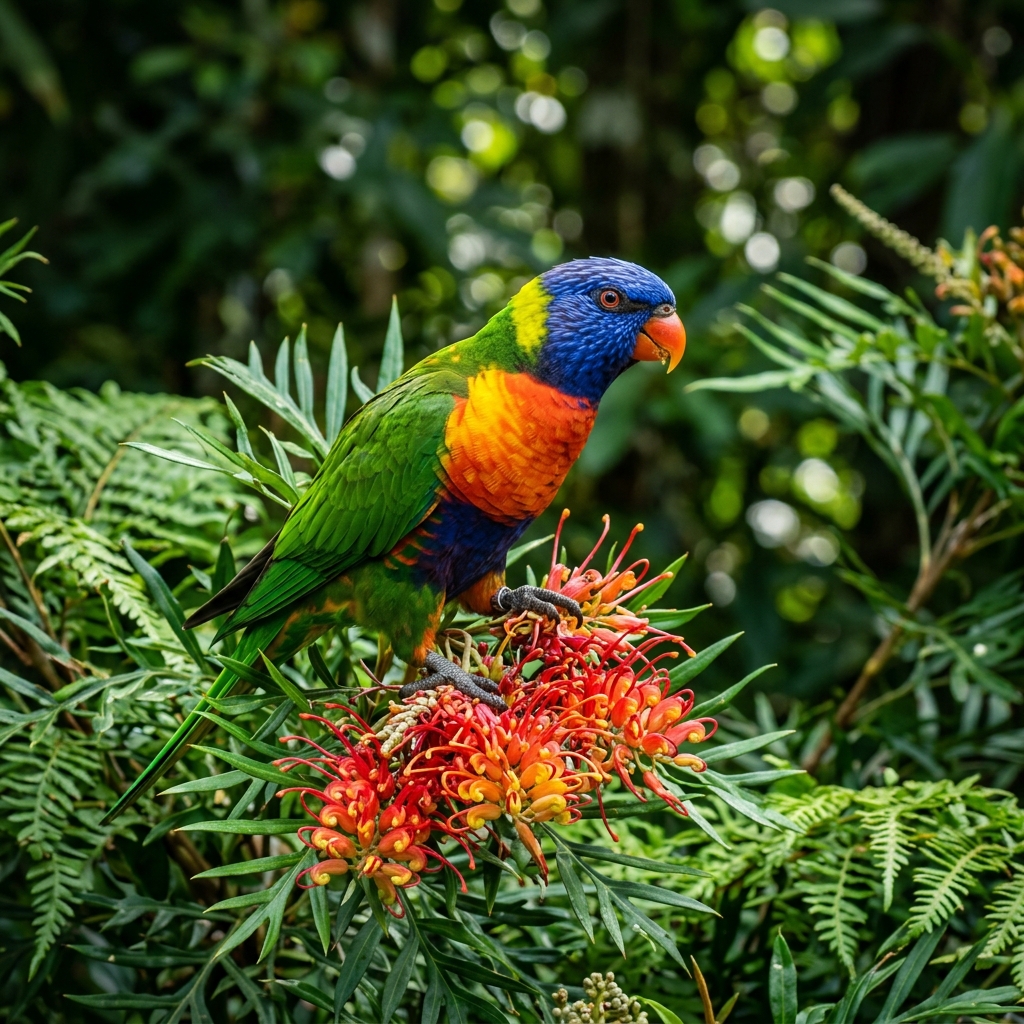
The world's second-largest bird stands 1.8 m tall — Mission Beach and Etty Bay are the most reliable Queensland sites, where individual birds walk forest tracks and visit gardens.
Queensland's endemic Bird-of-Paradise — males display from forest perches, raising their iridescent wings and twisting their necks to show off the blue-green gorget to visiting females.
Australia's largest cockatoo reaches Queensland only on Cape York — a target species for the Cape York odyssey, perching in pairs on tall dead trees in riparian woodland.
The world's smallest parrot and a specialist frugivore — tiny bright-green parrots hanging on fruiting figs are easily overlooked but are common in lowland Wet Tropics forest.
So sexually dimorphic that male (brilliant green) and female (red and blue) were considered different species for decades — loud and charismatic at fruiting trees across Queensland's tropics.
Migrates from New Guinea in November and nests in termite mounds in the Wet Tropics — stunning blue, orange, and white plumage with enormously long white tail streamers.
Cape York's outsized frogmouth — much larger than the familiar Tawny Frogmouth, its enormous gape and cryptic bark-like plumage make it vanish against the stem it perches on.
A Queensland endemic that forages by vigorously scratching through leaf litter in circles — the male's pure white throat patch and carrying call identify it instantly in Wet Tropics rainforest.
Free: Backyard Birds ID Chart
Printable PDF — verified eBird data
Ready to Bird Queensland Australia?
Use our smart trip planner to get a custom itinerary — best hotspots, species targets, and seasonal timing tailored to your visit.