Peru's national bird — massive orange-and-black males gather at dawn leks in cloud forest clearings, visible from lodges on the Manu Road in spectacular communal displays.
One of the world's smallest owls and discovered only in 1976 — the ECOAN reserve at Abra Patricia is the most reliable site, where it responds to playback from trail edges.
The most visually striking tern in the world — steel-gray with a vivid red bill, white facial plumes, and yellow gape wattles; roosts conspicuously on Paracas's rocky sea stacks.
The "Galápagos of South America" at Ballestas Islands hosts thousands of Humboldt Penguins alongside Peruvian Pelicans and South American Sea Lions.
Has only four tail feathers, including two enormously elongated racquet-tipped streamers that cross over each other — found at hummingbird feeders near Pomacochas in northern Peru.
Found only in tiny patches of high Andean Polylepis woodland — one of Peru's most threatened birds, with fewer than 250 individuals surviving in fragmented forest fragments.
Larger and darker than Brown Pelican — hundreds roost and breed on the Ballestas Islands alongside Humboldt Penguins in a remarkable concentration.
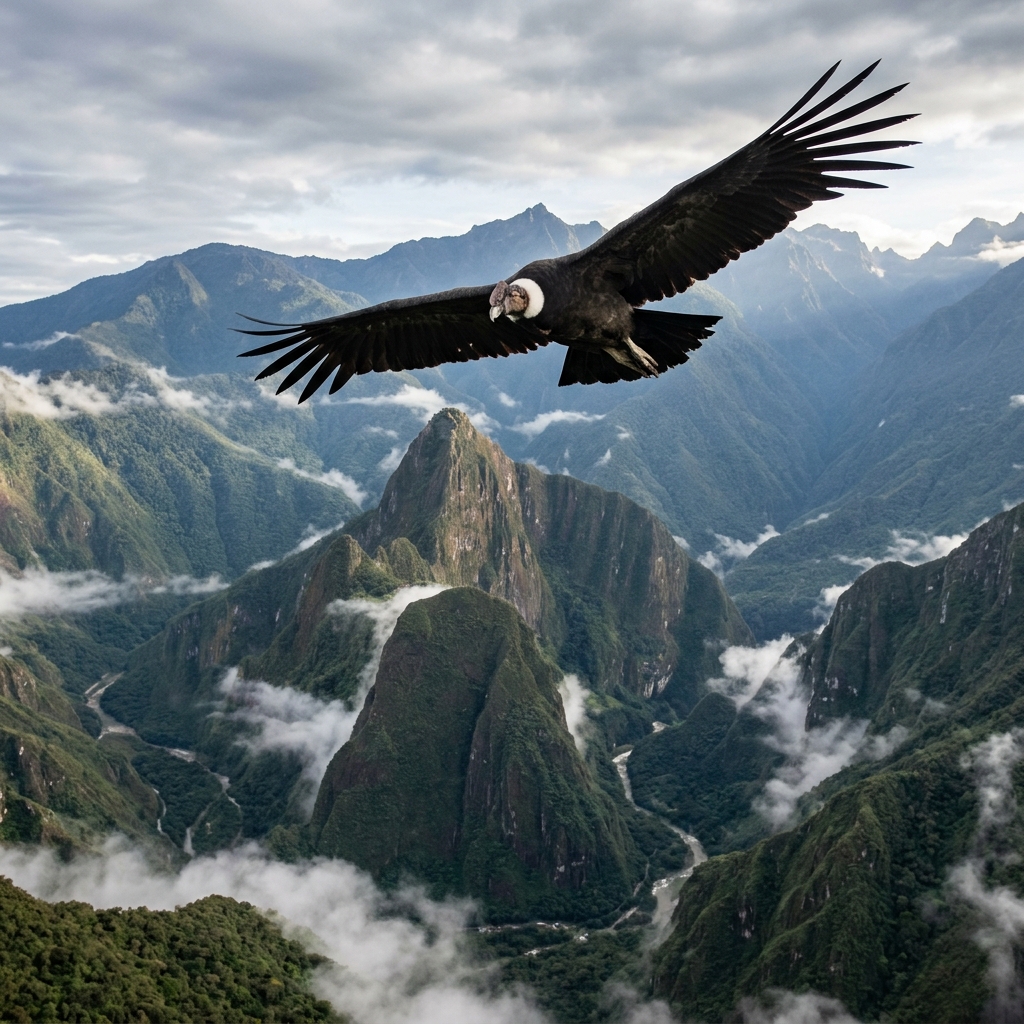
The Cruz del Condor viewpoint at Colca Canyon is Peru's most visited wildlife site — dozens of condors ride thermals past the viewpoint at easy binocular range each morning.
Free: Backyard Birds ID Chart
Printable PDF — verified eBird data
Ready to Bird Peru?
Use our smart trip planner to get a custom itinerary — best hotspots, species targets, and seasonal timing tailored to your visit.