Spain: Europe's Birding Capital
With over 630 recorded species, Spain is the most species-rich country in Western Europe. Its position at the junction of Europe and Africa places it directly on one of the planet's greatest migration routes, while its varied habitats — from arid steppes to alpine peaks to Atlantic wetlands — support a remarkable year-round resident community.
Top Birding Regions
Extremadura
The undisputed birding heartland of Spain. This sparsely populated region in the west offers:
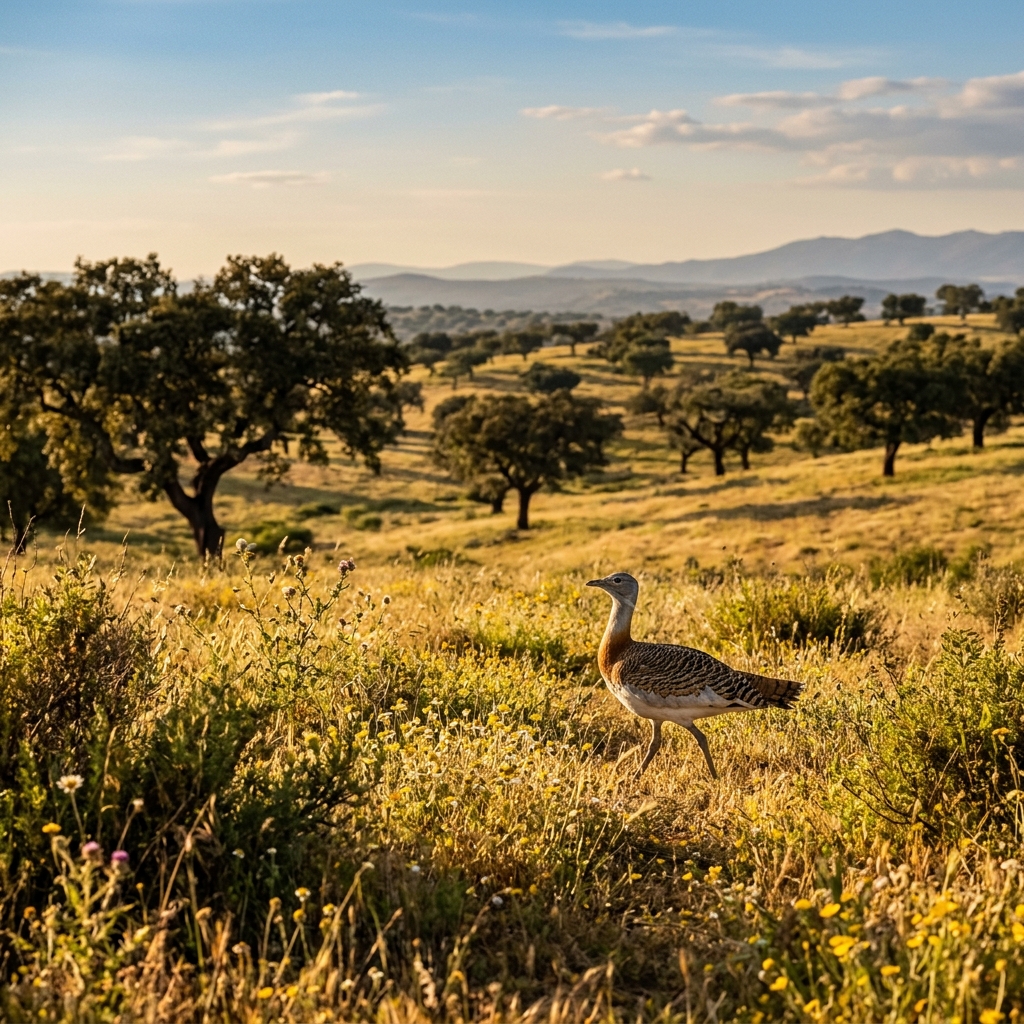
- Great Bustard: Europe's heaviest flying bird. Displaying males are unmistakable on the rolling plains around Cáceres and Trujillo.
- Spanish Imperial Eagle: ~700 individuals remain; regular at Monfragüe National Park
- Black Vulture: Europe's largest raptor colony. Monfragüe alone hosts 300+ pairs.
- Black Stork: Nests on cliff ledges at Monfragüe; visible from dedicated hides
- Best season: March – May for bustard leks and raptor breeding
Doñana National Park (Andalusia)
Europe's most important wetland and a UNESCO World Heritage Site:
- Greater Flamingo: Thousands breed and feed in the marismas (marshes)
- Spanish Imperial Eagle: 15+ pairs in the surrounding cork oak dehesa
- Marbled Teal: Globally threatened species; Doñana is a stronghold
- Audouin's Gull: Breeds along the coast
- Best season: October – March for wintering waterbirds; April – May for breeding species
Strait of Gibraltar
The narrow gap between Europe and Africa concentrates millions of migrants:
- Raptor migration: 300,000+ raptors pass through in autumn (August – October) including Honey Buzzard, Black Kite, Short-toed Eagle, and Egyptian Vulture
- White Stork: 300,000+ cross in autumn, visible from Tarifa
- Seabirds: Cory's and Balearic Shearwaters, Northern Gannet, and skuas
- Best season: Late August – October for southbound migration; March – May for northbound
Pyrenees
Mountain birding at its finest:
- Bearded Vulture (Lammergeier): Spain holds Europe's largest population
- Wallcreeper: Winter visitor to lower-elevation cliffs
- Alpine Accentor: Above 2,000m in summer
- Citril Finch: Pine forests at 1,500–2,200m
Seasonal Calendar
| Season | Highlights |
|---|---|
| Winter (Dec – Feb) | Wintering cranes at Gallocanta (80,000+), Great Bustard on Extremaduran plains, waterbirds at Doñana |
| Spring (Mar – May) | Bustard leks, raptor breeding at Monfragüe, Doñana in full bloom, northbound migration at Gibraltar |
| Summer (Jun – Aug) | Mountain species in Pyrenees and Picos de Europa, seabird colonies, bee-eaters |
| Autumn (Sep – Nov) | Southbound raptor migration at Gibraltar, crane arrival at Gallocanta, waterbird buildup at Doñana |
Practical Tips
- Rent a car. Spain's best birding sites are rural and not well-served by public transport.
- Book Monfragüe accommodations early. The village of Villarreal de San Carlos has limited options.
- Bring sun protection. Extremadura in spring can exceed 30°C. A sun hat and water are essential.
- Go local. Spanish birding guides are excellent and reasonably priced ($150–$250/day).
Find your perfect birding location next
Use our smart planner to discover the best spots matched to your experience level and the birds you want to see.