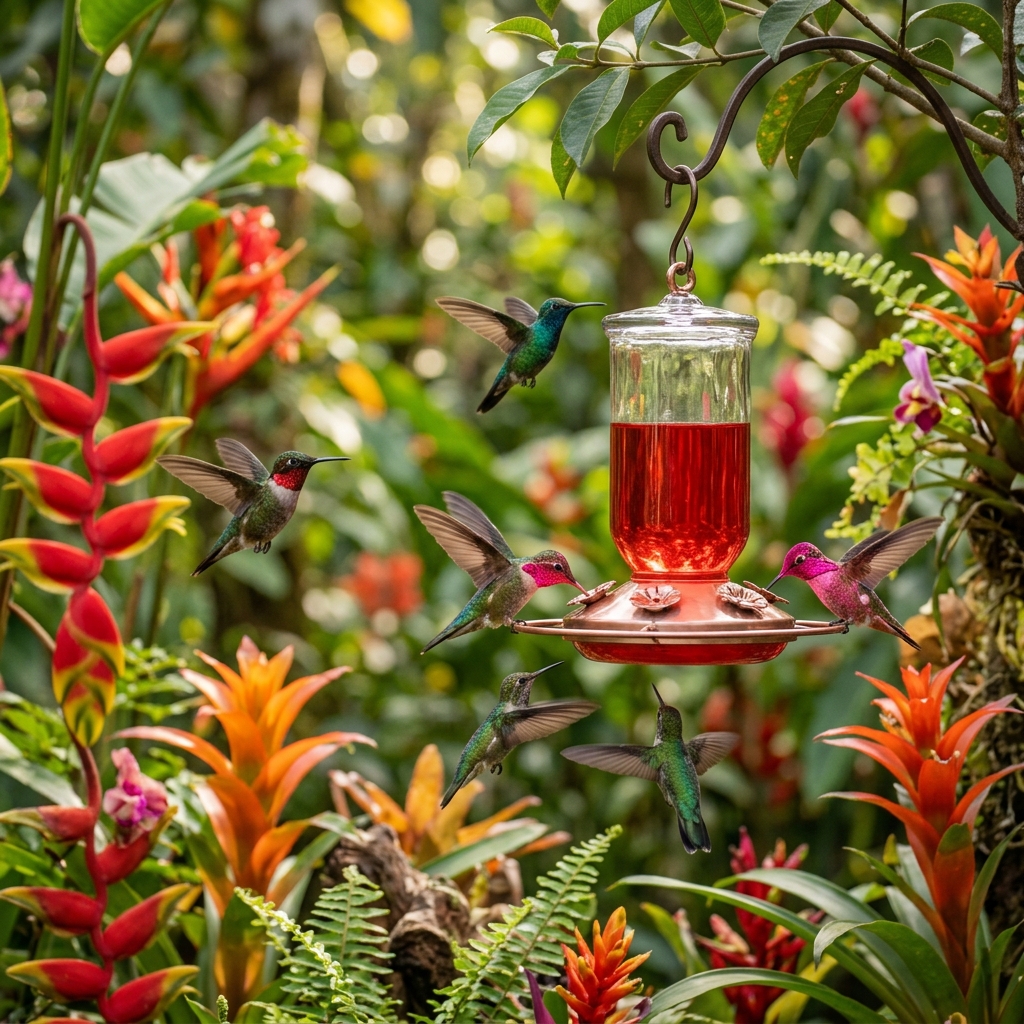
Hummingbirds: Nature's Aerial Acrobats
Hummingbirds are the only birds that can fly backwards, hover in place, and fly upside down. Their hearts beat up to 1,260 times per minute during flight. Their iridescent plumage changes color depending on the angle of light. By every measure, they are among the most extraordinary birds on Earth.
The Americas host all 360+ hummingbird species. In North America north of Mexico, 15 species breed regularly, with the highest diversity in the desert Southwest.
Key North American Species
Ruby-throated Hummingbird
- Range: Eastern North America (the only breeding hummingbird east of the Mississippi)
- Male: Emerald green back, brilliant ruby-red gorget (throat)
- Female: Green back, white underparts, no gorget
- Migration: Crosses the Gulf of Mexico nonstop (800 km in 18-20 hours)
- At feeders: March – October (varies by latitude)
Anna's Hummingbird
- Range: Pacific Coast, year-round from British Columbia to Baja
- Male: Rose-red crown and gorget extending to the sides of the neck
- Female: Green with a small patch of red spotting on the throat
- Unique: The only hummingbird that routinely winters in cold climates. Males perform a spectacular dive display — climbing 30m and diving at 100+ km/h.
- Voice: One of few hummingbirds with a complex song — a scratchy, buzzy warble
Rufous Hummingbird
- Range: Breeds Pacific Northwest to Alaska; migrates through the Rockies
- Male: Brilliant orange-rufous overall with a fiery red-orange gorget
- Female: Green back with rufous flanks and tail
- Temperament: The most aggressive hummingbird species. A single Rufous will defend a feeder against all comers, including birds twice its size.
- Record holder: Longest migration of any hummingbird relative to body size (nearly 6,000 km one way)
Broad-tailed Hummingbird
- Range: Rocky Mountain summer resident
- Male: Rose-magenta gorget; produces a distinctive metallic wing trill in flight
- Sound: The wing trill is diagnostic — you'll hear a Broad-tailed before you see it
- Habitat: Mountain meadows, pine-oak forests from 5,000-10,000 feet
Black-chinned Hummingbird
- Range: Western US, common from Texas to Washington
- Male: Black chin with a thin purple band at the base (visible only in direct light)
- Female: Nearly identical to female Ruby-throated — range is the best distinguishing feature
- Behavior: Pumps tail while hovering (Ruby-throated keeps tail still)
Feeder Guide
The Perfect Feeder Setup
- Sugar solution: 4 parts water to 1 part white granulated sugar. Boil, cool, fill.
- No red dye. Ever. The red feeder is sufficient to attract hummingbirds; dye provides no benefit and may be harmful.
- Change nectar every 2-3 days in warm weather (every 5-7 days in cool weather). Fermented nectar can cause lethal fungal infections.
- Clean feeders thoroughly with hot water and a bottle brush at each refill. No soap residue.
Feeder Placement
- Hang in partial shade (full sun ferments nectar faster)
- Near flowers or shrubs (provides perching and cover)
- Visible from a window for your viewing pleasure
- Multiple feeders spaced 15+ feet apart help reduce territorial aggression
When to Put Out Feeders
| Region | Spring (put up) | Fall (take down) |
|---|---|---|
| Gulf Coast | Early March | Late November |
| Southeast | Late March | Late October |
| Northeast | Mid-April | Mid-October |
| Pacific NW | March | November |
| Southwest | Year-round | Year-round |
Leave feeders up 2 weeks after last sighting — late migrants may depend on them.
Photography Tips
- Use a flash/speedlight. This freezes wing motion and illuminates iridescent gorgets.
- Shutter speed: 1/4000s minimum for frozen wings; 1/250s with flash
- Background: Place feeders near flowering plants for natural-looking compositions. Remove the feeder from the photo by placing a small flower vial near a natural perch.
- Patience: Hummingbirds are creatures of routine. They visit the same feeders at roughly the same times each day.
Find your perfect birding location next
Use our smart planner to discover the best spots matched to your experience level and the birds you want to see.