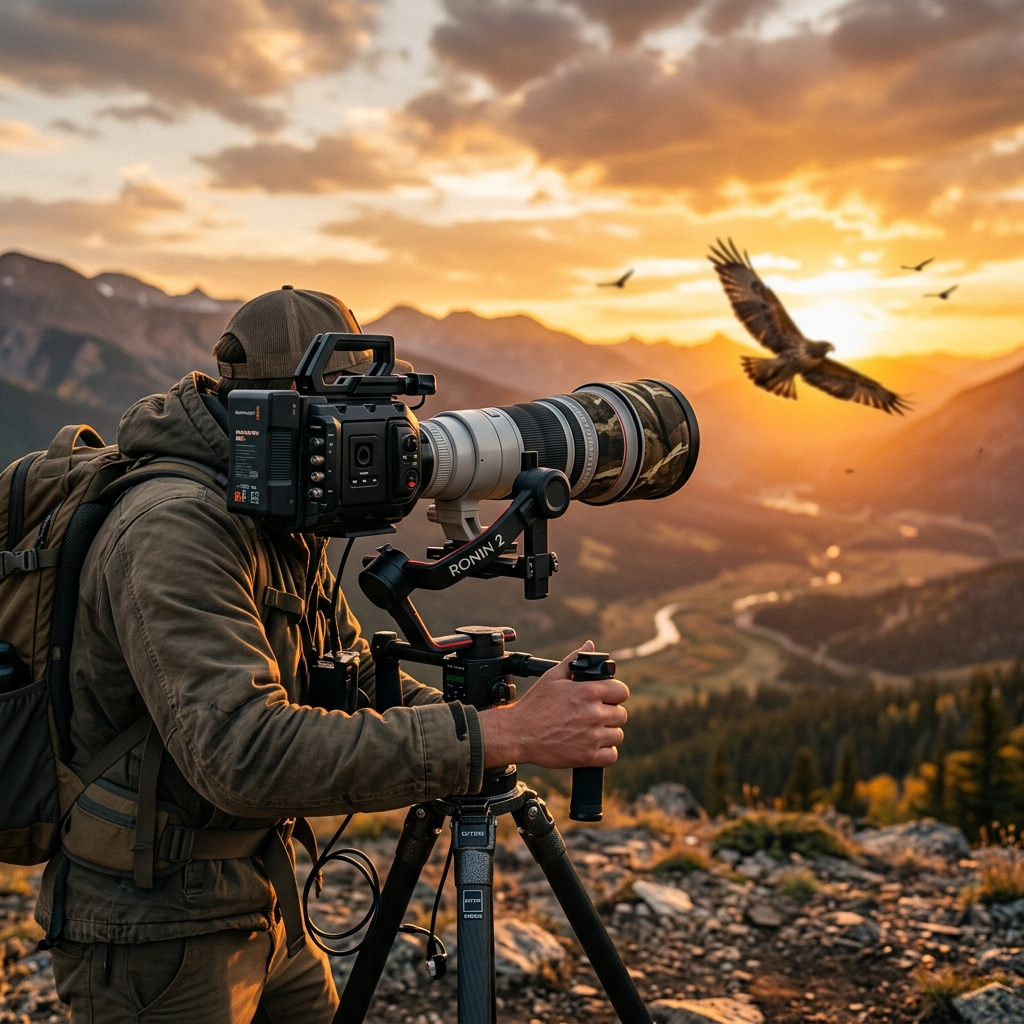
Why Birds in Flight Are the Ultimate Challenge
Photographing birds in flight (BIF) is widely considered the most technically demanding genre in wildlife photography. You're tracking a small, fast, erratically moving subject against a variable background while managing exposure, focus, and composition in real-time. But the results — a sharp raptor banking in golden light, a hummingbird frozen mid-hover — are among the most spectacular images in nature photography.
Camera Settings
Shutter Speed
This is the most critical setting for BIF photography:
- Minimum 1/2000s for most birds in active flight
- 1/3200s or faster for small, fast species (swallows, terns, hummingbirds)
- 1/1000s can work for large soaring birds (eagles, pelicans) with minimal wing movement
- Rule of thumb: When in doubt, go faster. A sharp image at ISO 3200 beats a blurry one at ISO 400.
Aperture
- Shoot wide open (f/4, f/5.6, or f/6.3 depending on your lens) for maximum shutter speed
- The shallow depth of field at f/4 blurs distracting backgrounds beautifully
- Most bird lenses are sharpest 1/3 to 2/3 stop down from maximum aperture
ISO
- Set to Auto ISO with a maximum of ISO 6400 (or ISO 12800 on modern full-frame bodies)
- Modern sensors handle noise far better than missed shots from insufficient shutter speed
- Noise reduction in post-processing is easy; motion blur is permanent
Drive Mode
- Use the highest continuous shooting speed your camera offers (10+ fps is ideal)
- Electronic shutter can achieve 20-30 fps on mirrorless bodies, but check for rolling shutter distortion
Autofocus Configuration
Focus Mode
- Use Continuous AF (AF-C on Nikon/Sony, AI Servo on Canon)
- Enable Animal/Bird Eye Detection AF if your camera supports it (Sony A1, Nikon Z8/Z9, Canon R5/R6)
Focus Area
- Wide-area tracking with subject detection is the modern standard for mirrorless cameras
- For DSLRs, use Group AF or Dynamic Area AF (25 or 72 points)
- Start with the bird near the center of the frame, let the AF system lock on, then recompose
Back-Button Focus
Separate autofocus from the shutter button by assigning AF to a rear button (AF-ON):
- Press and hold the rear button to focus continuously while tracking
- Half-press the shutter only to meter and shoot
- This prevents the camera from refocusing when you press the shutter
Technique: How to Track Birds
The Panning Method
- Find an incoming bird at distance and begin tracking it smoothly with your lens
- Match the bird's speed with your pan — the bird should stay roughly centered
- Begin shooting in continuous bursts as the bird reaches optimal distance
- Follow through after shooting, like a golf swing
Anticipation Is Key
- Watch flight paths. Most birds follow predictable routes between perches, feeding areas, and nests.
- Position yourself with the sun behind you and the expected flight path in front
- Pre-focus to the expected distance to give your AF system a head start
Recommended Gear
| Category | Beginner | Enthusiast | Professional |
|---|---|---|---|
| Body | Sony A6700, Canon R10 | Nikon Z8, Sony A7R V | Sony A1, Nikon Z9 |
| Lens | 100-400mm f/5-6.3 | 200-600mm f/5.6-6.3 | 600mm f/4 |
| Tripod | Handheld | Monopod | Gimbal head on tripod |
| Cards | UHS-I 128GB | UHS-II 128GB | CFexpress 256GB |
Composition Tips
- Leave space in front of the bird. The bird should be flying into the frame, not out of it.
- Include the eye. A sharp eye makes or breaks the image, even if the wing tips are slightly soft.
- Shoot against clean backgrounds. Blue sky, distant foliage, or water create non-distracting backdrops.
- Capture behavior. A bird carrying prey, landing on a nest, or interacting with another bird tells a story.
Find your perfect birding location next
Use our smart planner to discover the best spots matched to your experience level and the birds you want to see.