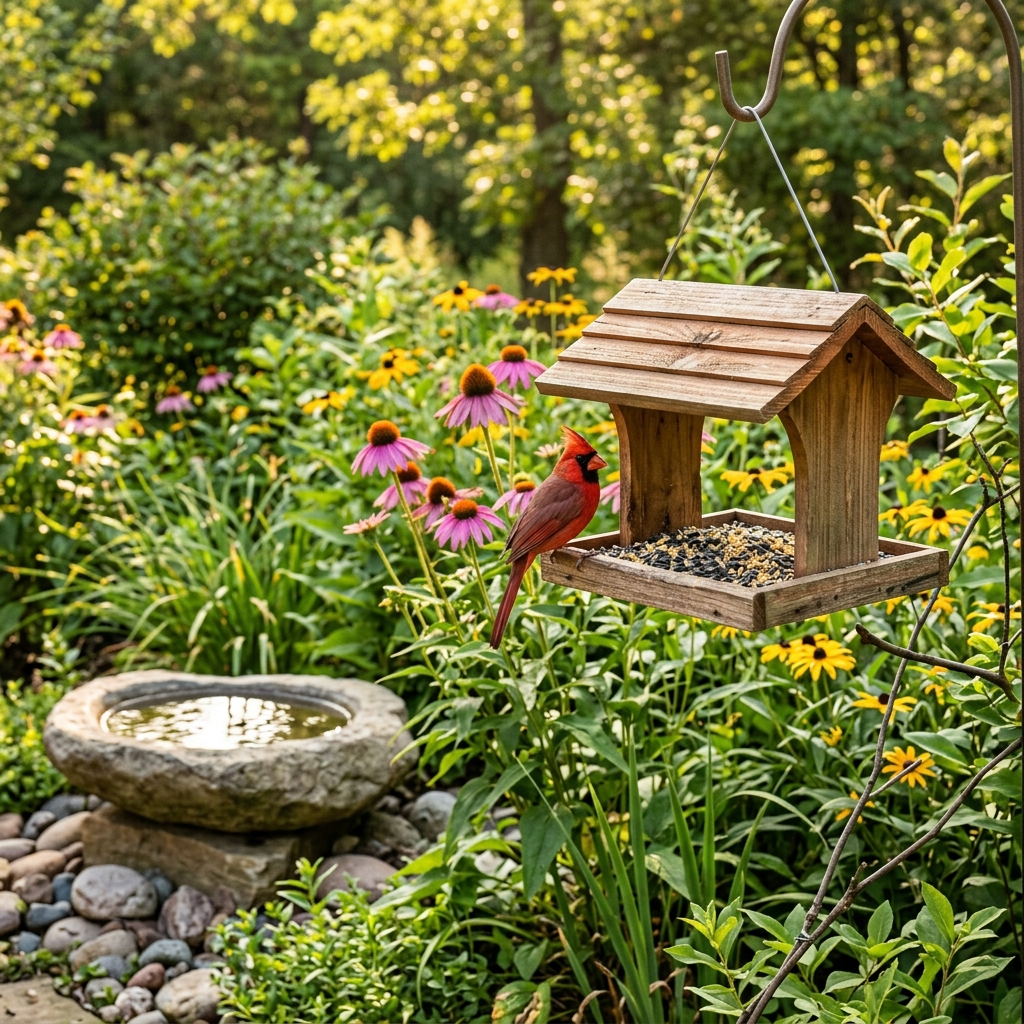
Imagine stepping out your back door into a vibrant, living tapestry. The air hums with the cheerful chatter of chickadees, a flash of brilliant blue reveals a jay investigating a feeder, and the gentle whir of hummingbird wings hovers over a flower bed. This isn't a distant nature preserve; it's your own backyard, transformed into a sanctuary for native birds.
Creating a bird-friendly habitat is one of the most rewarding ways to connect with nature. It's a simple act of conservation that brings daily joy and wonder. You don't need a sprawling estate—even a small patio or balcony can become a vital stopover for local and migrating birds. Let's explore how you can roll out the welcome mat for your feathered neighbors.
The Four Pillars of a Thriving Bird Habitat
To attract a diverse range of birds, you need to think like one. Birds are constantly searching for four key things: food, water, shelter, and a place to raise their young. By providing these four elements, you create an irresistible ecosystem.
Pillar 1: Food - A Buffet of Natural and Supplemental Treats
The best way to feed birds is by mimicking their natural environment. A combination of native plants and well-chosen feeders will create a year-round feast.
- Plant Native: This is the single most effective thing you can do. Native plants provide insects, seeds, nectar, and fruit that local birds have evolved to eat. Think sunflowers for finches, cone-flowers for goldfinches, and tubular flowers like bee balm for hummingbirds.
- Choose the Right Feeder: Different birds prefer different feeders.
- Tube Feeders: Perfect for smaller birds like chickadees, finches, and nuthatches.
- Hopper Feeders: Great for cardinals, jays, and grosbeaks.
- Suet Cages: A magnet for woodpeckers, nuthatches, and wrens, especially in winter.
- Nyjer (Thistle) Feeders: Specifically designed for the tiny bills of American Goldfinches and Pine Siskins.
- Offer High-Quality Seed: Not all birdseed is created equal. Many cheap mixes are full of filler like red milo and oats, which most birds discard. Stick to the good stuff: black-oil sunflower seeds are the universal crowd-pleaser.
Pillar 2: Water - A Bird's Essential Oasis
Water is just as important as food, if not more so. Birds need it for drinking and bathing to keep their feathers in prime condition for flight and insulation.
- Install a Bird Bath: A simple, shallow basin is all you need. Ensure it's no more than 2-3 inches deep in the center, with sloping sides for easy access. Place it near shrubs or a tree to give birds a quick escape route from predators.
- Make it Move: The sound and sight of moving water is a bird magnet. Adding a solar-powered fountain, a dripper, or even a wiggler to your bird bath will attract species that might otherwise fly right over your yard.
Pillar 3: Shelter - A Safe Haven from Harm
Birds need safe places to rest, preen, and hide from predators and harsh weather. A perfectly manicured lawn offers very little protection.
- Layer Your Landscaping: Create layers with trees, shrubs, and groundcover. Evergreen trees and shrubs are particularly valuable as they provide year-round cover.
- Build a Brush Pile: Don't be too tidy! A loose pile of fallen branches and twigs in a corner of your yard creates a five-star hotel for sparrows, wrens, and towhees.
- Leave the Leaves: In the fall, rake leaves into your garden beds instead of bagging them up. They provide cover for ground-foraging birds and harbor a tasty buffet of insects.
Pillar 4: A Place to Raise Young
Turn your backyard visitors into long-term residents by giving them a place to nest.
- Provide Nesting Materials: Leave out small piles of twigs, dead grass, pet fur, and bits of string for birds to use in their nests.
- Install Birdhouses: Choose a birdhouse designed for a specific species you want to attract, like bluebirds or wrens. Ensure it has the correct hole size, proper ventilation, and no perch (which can help predators).
- Let it Grow: Allow some parts of your yard to be a little wild. Dense thickets and shrubs are prime nesting real estate for many species.
Answering Your Backyard Birding Questions
We hear a lot of specific questions from the AvianScope community. Here are answers to a couple of common queries.
How can I find a seed mix for native Alberta birds (and deter sparrows)?
This is a fantastic question! The key is to offer foods that desirable native birds love and that invasive House Sparrows and European Starlings tend to ignore.
For Alberta's wonderful native species like Black-capped Chickadees, Boreal Chickadees, Nuthatches, and Finches, focus on these seeds:
- Black-Oil Sunflower: The #1 choice for most small, native songbirds.
- Safflower Seed: Cardinals and grosbeaks love it, but sparrows, starlings, and squirrels often leave it alone. It's a great "problem-solver" seed.
- Nyjer (Thistle) Seed: Exclusively for finches. Use a dedicated feeder with tiny ports that larger birds can't use.
- Avoid: Spreading cracked corn or cheap millet blends on the ground or in open platform feeders. This is an open invitation for sparrows, starlings, and pigeons.
Pro-Tip: Use feeders that deter larger birds. A weight-activated feeder is a brilliant investment. These models have ports that shut when a heavier bird or squirrel lands on the perch. Check out a quality squirrel-proof bird feeder 🛒 to ensure your seed goes to the birds you want to attract.
How close can a bat tower be to a Chimney Swift tower?
It's great that you're thinking about providing homes for both of these amazing aerial insectivores! While they share a love for flying insects, their housing needs and flight patterns are different.
- Chimney Swifts need a completely unobstructed, straight-down approach to their tower entrance from high above.
- Bats are more agile and can navigate around obstacles to enter their house.
There is no universally agreed-upon minimum distance, but a good rule of thumb is to place them at least 20-30 feet (6-9 meters) apart. The most important factor is ensuring the Chimney Swift tower has a clear, open flyway above and around it. Don't place the bat tower directly in the swifts' flight path. Giving them separate spaces will prevent any potential stress or competition and allow both colonies to thrive.
Level Up Your Backyard Birding Experience
Once your habitat is thriving, you'll want to get a closer look at your new residents. The right gear can transform your viewing experience from a fleeting glimpse into a detailed observation.
The Joy of a Birding Camera
Have you ever wondered exactly which warbler is visiting your water feature? A dedicated backyard camera can reveal the secret lives of your avian visitors. Modern smart feeders with integrated cameras are a game-changer, sending notifications to your phone and even identifying species for you! Capturing a stunning, up-close photo of a cardinal in the snow is an incredible thrill. For high-quality video and photos, consider a versatile outdoor wildlife camera 🛒 that you can position near feeders or baths.
The Right Optics for Your Window
A great pair of binoculars is a birder's most essential tool. You don't need a massive, heavy pair for backyard viewing. A quality pair of 8x42 binoculars offers a wide field of view (making it easy to find the bird) and excellent light-gathering ability for those dawn and dusk visitors. They are the perfect balance of power and portability. Keep a pair like the popular Vortex Diamondback HD 8x42 Binoculars 🛒 on your windowsill, and you'll never miss a moment.
Your Backyard Awaits
Creating a bird-friendly backyard is a journey, not a destination. Start with one small change—a simple bird bath or a single native plant. As you add more elements, you'll be amazed at the life that appears. You're not just feeding birds; you're restoring a small piece of the natural world, creating a crucial refuge for wildlife, and bringing endless beauty and fascination right to your doorstep.
Happy birding
Find your perfect birding location next
Use our smart planner to discover the best spots matched to your experience level and the birds you want to see.