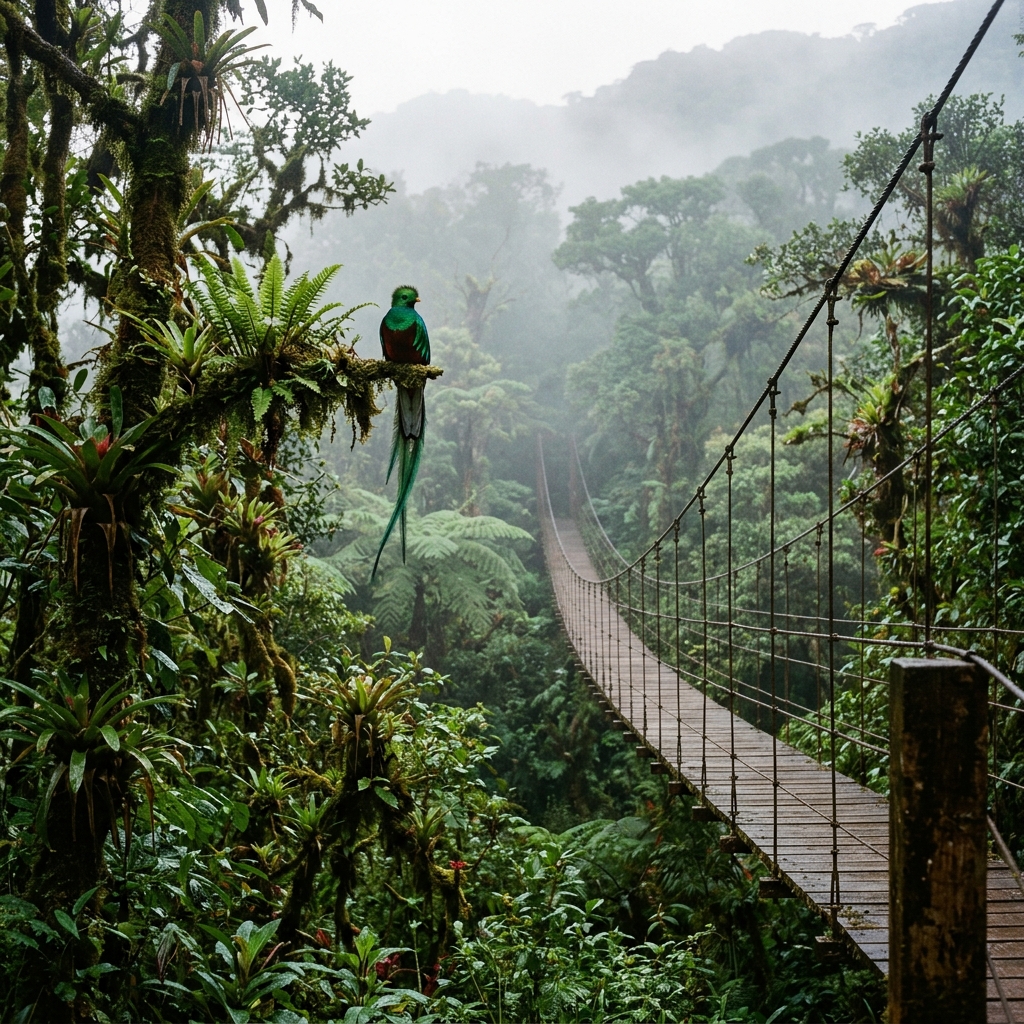
Why Costa Rica Is a Birding Paradise
Costa Rica packs over 920 confirmed bird species into a landmass smaller than West Virginia. The country's strategic position between North and South America, combined with elevations ranging from sea level to 3,820 meters, creates an extraordinary diversity of habitats — and birds.
Dry Season: December to April
The dry season is the most popular time for birdwatching in Costa Rica, and for good reason. Clear skies, minimal rain, and peak activity from both resident and migratory species make this the gold standard window.
December – February
- Northern migrants (warblers, tanagers, thrushes) are well-established in their wintering grounds
- Resplendent Quetzals begin their breeding displays in Monteverde and San Gerardo de Dota
- The Pacific lowlands are dry with excellent visibility at Carara National Park
- Top spots: Monteverde Cloud Forest, La Selva Biological Station, Carara National Park
March – April
- Peak breeding season for many resident species
- Quetzal nesting activity is at its highest in the highlands
- Scarlet Macaws are active at Carara and the Osa Peninsula
- Hummingbird activity peaks as dry-season flowers bloom
- Top spots: San Gerardo de Dota, Osa Peninsula, Arenal area
Green Season: May to November
The green season brings afternoon rains but also unique birding opportunities. Prices are lower, crowds thinner, and certain species are more active.
May – June
- Breeding season continues for many resident species
- Three-wattled Bellbird calling season in Monteverde
- Shorebird migration along the Pacific coast
- Advantage: Fewer tourists, lower lodge prices
July – August
- Mini dry season ("veranillo") brings a pleasant break in rainfall
- Excellent time for the Caribbean slope — La Selva and Tortuguero
- Oceanic species visible on Pacific pelagic trips
September – November
- Fall migration brings waves of North American species southward
- Raptor migration peaks in October (Broad-winged Hawks by the thousands)
- Waterbird concentrations build at Caño Negro and Palo Verde
Best Parks by Season
| Park | Best Months | Key Species |
|---|---|---|
| Monteverde Cloud Forest | Jan – Apr | Resplendent Quetzal, Three-wattled Bellbird |
| La Selva Biological Station | Year-round | Great Green Macaw, Keel-billed Toucan |
| Carara National Park | Dec – Apr | Scarlet Macaw, Boat-billed Heron |
| Osa Peninsula (Corcovado) | Dec – Apr | Harpy Eagle, Baird's Tapir area species |
| Caño Negro Wildlife Refuge | Nov – Mar | Jabiru, Roseate Spoonbill, Anhinga |
| Arenal Volcano area | Year-round | Sunbittern, Ornate Hawk-Eagle |
Practical Tips
- Elevation matters more than season. The highlands (1,500m+) are often cool and misty regardless of season.
- Start early. The first two hours after dawn (5:30–7:30 AM) are the most productive everywhere in Costa Rica.
- Hire a local guide. Costa Rica has some of the best birding guides in the Americas. Expect $200–$400 USD per day for a private guide.
- Bring rain gear year-round. Even in the dry season, highland cloud forests get afternoon mist.
Find your perfect birding location next
Use our smart planner to discover the best spots matched to your experience level and the birds you want to see.