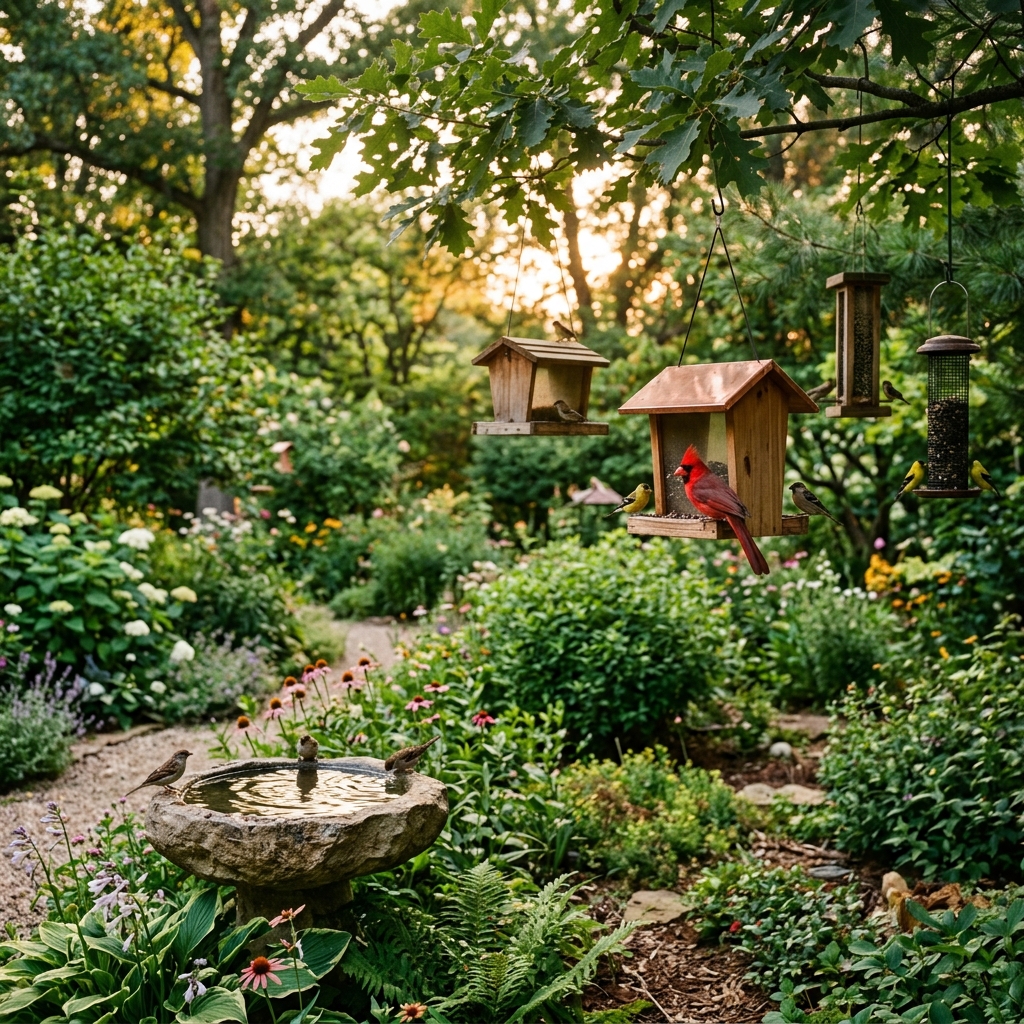
The Science Behind Bird Feeding
The Cornell Lab of Ornithology estimates that 59 million Americans feed wild birds, spending $4 billion annually on birdseed alone. Research shows that supplemental feeding can increase local bird diversity by 25-40% and improve winter survival rates for resident species.
But not all feeding strategies are equal. The right combination of food, feeders, water, and habitat can attract 20+ species to even a suburban yard.
The Three Essential Feeders
1. Tube Feeder with Black-Oil Sunflower Seed
This single setup will attract the most species. Black-oil sunflower is the universal favorite — accepted by 95% of feeder-visiting species.
- Species attracted: Cardinals, chickadees, titmice, nuthatches, finches, grosbeaks
- Placement: Hang 5-6 feet off the ground, 10+ feet from dense cover (to reduce predator ambush)
- Tip: Choose a feeder with a built-in tray to catch fallen seeds
2. Suet Feeder
A mesh cage holding a suet cake attracts insect-eating species that ignore seed feeders.
- Species attracted: Woodpeckers (all species), nuthatches, wrens, kinglets, warblers (in migration)
- Placement: Mount on a tree trunk or hang from a branch
- Seasonal note: Use no-melt suet in summer to prevent rancidity
3. Ground or Platform Feeder with Mixed Seed
Some species prefer feeding on the ground or on low, open platforms.
- Species attracted: Juncos, sparrows, towhees, doves, quail, jays
- Seed mix: White millet + cracked corn + sunflower hearts
- Tip: Clean daily to prevent mold; avoid large accumulations
Beyond Seed: Specialty Foods
| Food | Target Species | Notes |
|---|---|---|
| Nyjer (thistle) | Goldfinches, Pine Siskins | Use a special thistle feeder with tiny ports |
| Peanuts (shelled) | Jays, woodpeckers, titmice | High energy; attracts larger species |
| Mealworms | Bluebirds, robins, wrens | Live or dried; use a smooth-sided dish |
| Sugar water (4:1) | Hummingbirds | No red dye. Change every 2-3 days in warm weather. |
| Oranges/grape jelly | Orioles | Spring arrival through summer; half oranges on a nail |
Water: The Secret Weapon
A birdbath with moving water attracts more species than any feeder. Many birds that never visit feeders will come to water — warblers, vireos, thrushes, and tanagers.
- Moving water is key. Add a solar fountain, dripper, or mister. Birds are attracted to the sound of splashing.
- Depth: 1-2 inches maximum. Add flat stones for birds to stand on.
- Winter: A heated birdbath can be your most productive feature when natural water sources freeze.
- Placement: Near cover (within 10 feet of shrubs) but visible from multiple angles for bird safety.
Native Plants: The Long Game
Feeders provide supplemental food, but native plants provide natural food, nesting habitat, and insect populations that sustain bird communities year-round.
Top Plants by Region (Eastern North America)
- Serviceberry (Amelanchier): Berries attract 40+ species
- Eastern Red Cedar: Winter fruit for Cedar Waxwings, robins
- Native Oaks: Support 500+ caterpillar species (critical nestling food)
- Coneflower (Echinacea): Goldfinches feed on seed heads through winter
- Virginia Creeper: Fall berries attract 35+ species during migration
Monthly Action Plan
| Month | Action |
|---|---|
| January | Maintain suet and sunflower. Add a heated birdbath. |
| February | Clean nest boxes. Start a bird count for the Great Backyard Bird Count. |
| March | Put up a hummingbird feeder. |
| April | Add oriole feeders (orange halves + grape jelly). |
| May | Reduce feeder quantity as natural food sources bloom. |
| June–August | Focus on water features. Use no-melt suet. Change hummingbird nectar frequently. |
| September | Resume sunflower feeding as migration begins. |
| October | Clean and prepare nest boxes for winter roosting. |
| November | Stock up on seed for winter. Check feeder condition. |
| December | Participate in the Christmas Bird Count. Continue full feeding program. |
Find your perfect birding location next
Use our smart planner to discover the best spots matched to your experience level and the birds you want to see.